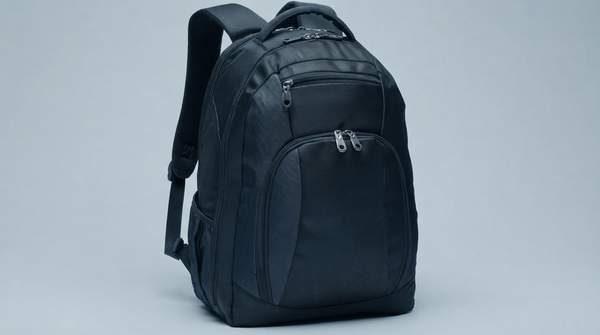
You can judge a backpack's durability and weather resistance before you ever carry it, by reading three things off the spec sheet: the fabric's denier rating, its coating or backing, and how the seams are closed. Applied to three commuter models with verifiable specifications—the Yeti Crossroads, the Chrome Industries Urban Ex 20L, and the Timbuk2 Parker—these metrics reveal a clear trade-off: the heaviest, most weatherproof construction is not always the same bag as the one with the toughest fabric.
Understanding Backpack Durability: Denier and Materials
Denier, abbreviated as D, is a measurement of the thickness of the fibers, and the higher the number, the more durable the fabric, as Popular Mechanics explains in its commuter backpack guide. A 700D nylon is therefore built from thicker fibers than a 300D polyester, and that thickness is a key indicator of how well a shell resists tears and abrasion over years of daily use.
Material choice matters alongside the number. Popular Mechanics notes that the commuter bags it recommends are constructed of nylon or a similar polyester specifically because of their water resistance, with some adding a DWR coating for extra protection. Eiken Shop's materials guide describes PU-coated nylon as offering a balance between flexibility, strength, and water resistance, while tarpaulin is characterized as super tough and common in messenger bags and marine gear.
One caution: denier measures fabric thickness and durability, not water resistance. A low-denier fabric with the right coating and seam construction can outperform a high-denier plain weave in a storm. Treat denier as a durability signal, and read the weather protection separately.
Water Resistance vs. Waterproof: Key Construction Details
The gap between "water-resistant" and "waterproof" comes down to construction, not marketing adjectives. Eiken Shop's guidance is blunt about where bags fail: great fabric matters, but it is the construction details that truly seal the deal or let water sneak in. Welded or heat-seamed seams, it explains, prevent water from seeping in through stitch lines, because every stitched seam is a row of needle holes.
The Chrome Urban Ex 20L illustrates the full waterproof formula. Pack Hacker's review describes its main material as 500-denier nylon with a PU coating and TPU backing, all welded at the seams to ensure a water-tight seal. That is three layers of defense: a mid-weight fabric, two protective layers, and no stitched seams to leak.
By contrast, the Timbuk2 Parker takes a layered but not fully sealed approach. Timbuk2's own product page describes its Rain Resist fabric as a water-resistant bonded fabric that holds back rain and puddles, and Pack Hacker's review confirms the bag is highly water-resistant with an included rainfly—a deployable cover for sustained downpours. Popular Mechanics adds that taped zippers keep moisture from seeping into pockets on well-designed commuter bags. Water-resistant bags can handle drizzle and splashes; genuinely waterproof construction is what keeps contents dry in a downpour.