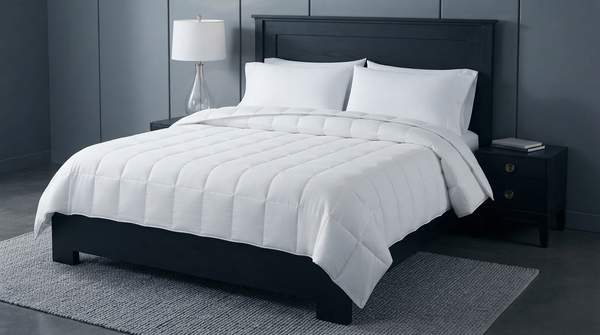
If you're shopping for a down-alternative comforter, the single most useful decision you can make isn't about brands—it's about fill material. Synthetic polyester and microfiber fills dominate the category, while plant-based options like bamboo viscose and silk offer a different feel. Your choice comes down to three questions: how warm you sleep, how much weight you like on the bed, and how much laundering you're willing to do. Here's how I'd work through them.
Understanding Down-Alternative Comforters: Beyond the Basics
A down-alternative comforter is any comforter that replaces goose or duck down clusters with another insulating material—most often polyester or microfiber, but sometimes plant-derived fibers like bamboo viscose or silk. Reviewers at Mattress Clarity note that people turn to these fills for several reasons: down costs more, can exacerbate allergies, and some shoppers avoid it on ethical grounds. Down-alternative comforters are generally hypoallergenic and cost less than down.
Bedding retailer Peacock Alley frames the trade-off plainly: down-alternative duvets are easy to maintain, naturally hypoallergenic, and less expensive than down, but they're heavier due to the extra filling needed for warmth, less breathable, and typically need replacing every few years. That weight-and-breathability penalty is the price of admission, and understanding it is the key to buying well.
Decoding Warmth and Weight: GSM vs. Fill Power
Down comforters are rated by fill power—a measure of how much space an ounce of down occupies, with higher numbers meaning more loft and insulation. Peacock Alley explains that a good down duvet measures 550–750 fill, and because down is naturally lofty, it can be warm with less filling, which keeps it lightweight.
Down alternatives don't use fill power. Instead, their warmth is measured in GSM—grams per square meter. Puredown's buying guide lays out the benchmarks: under 300 GSM is lightweight, best for hot sleepers, warm climates, or summer; 300–500 GSM is the all-season sweet spot that works for most of the year in most climates. The higher the GSM, the heavier and warmer the comforter.
This is why alternatives are usually bulkier than down at the same warmth. Superior Brand's guide puts it directly: pure, high-fill-power down is technically warmer than down alternative when comparing the same weight, because down clusters trap air more efficiently than synthetic fibers. Manufacturers compensate by adding more fill—which is exactly why a down-alternative comforter that matches a down comforter's warmth will feel heavier and thicker on your body. If you love a substantial, tucked-in feel, that's a feature. If you sleep hot, it's a reason to choose a lower GSM.
Down-Alternative Comforter Fill Material Comparison
Here's the at-a-glance comparison of the two main down-alternative fill families. One note on scope: alpaca fill is sometimes marketed as a down alternative, but I'm limiting this table to synthetic and plant-based fills, where the evidence is clearest.
| Fill Material | Typical Feel (Weight/Bulk) | Best For | Allergy Friendliness | Care Requirements |
|---|---|---|---|---|
| Synthetic (polyester/microfiber) | Heavier and bulkier than down for comparable warmth; weight varies by GSM, with higher GSM meaning heavier and warmer | Cost-conscious shoppers, people avoiding animal products, and those who want a choice of warmth levels (lightweight to heavyweight) | Generally hypoallergenic and less likely to trigger allergies than down—though this applies to the fill itself, not necessarily the outer fabric | Typically machine washable at home; always check the product label for specific instructions |
| Plant-based (bamboo viscose/silk) | Breathable and suitable for all seasons; specific weight and warmth vary by blend and construction | Sleepers who prioritize breathability and natural-fiber options; suitability depends on your preference for warmth and airflow | Marketed as hypoallergenic; down alternatives generally avoid the dust-mite and quill issues of down | Varies by product—check the label before assuming machine washing |
The pattern worth noticing: synthetic fills win on price, washability, and warmth-level variety, while plant-based fills lean on breathability. Cozy Earth, which makes both, describes its synthetic fill as designed for all-season use—providing insulation without trapping heat—inside a breathable viscose-from-bamboo shell, and notes that hot sleepers usually prefer it over down.
Care and Maintenance for Longevity and Allergy Relief
The allergy case for down alternatives rests on two pillars, and Superior Brand's guide names both. First, the synthetic polyester fibers are naturally hypoallergenic, unlike natural down, which can sometimes contain allergens. Second—and this matters just as much—down alternatives are washable at home, so you can clean them easily and frequently to remove dust mites and other trapped irritants. Down comforters, by contrast, are what Peacock Alley calls high maintenance.
Two honest caveats. The hypoallergenic claim applies to the fill material itself, not necessarily the outer fabric, so a sensitive sleeper should look at the shell too. And durability is the category's weak spot: Peacock Alley notes down-alternative duvets need to be replaced every few years, where well-kept down can last longer. Mattress Clarity adds that higher-quality materials are often more durable, so a better-made comforter may stretch that replacement cycle.
Making Your Choice: A Comforter for Every Sleeper
My advice is to let your sleeping temperature drive the decision, then let care preferences break ties. If you sleep hot, look for a lightweight synthetic fill—under 300 GSM per Puredown's benchmarks—or a breathable bamboo viscose option; Mattress Clarity's testing notes that lightweight and all-season models are the way to go for hot sleepers, with the trade-off that they're thinner and less fluffy. If you sleep cold or love weight on the bed, a higher-GSM synthetic in the all-season range or above will suit you better, and the extra bulk that makes alternatives heavier than down becomes part of the appeal.
If allergies are your main concern, a machine-washable synthetic fill is the most practical route, since frequent home washing is what keeps dust mites and irritants at bay. If you want natural fibers and prioritize airflow over maximum warmth, plant-based fills are worth the look. And whatever you choose, check the care label before the first wash—instructions vary by product.
The decision, in short: select a down-alternative comforter based on your primary needs for warmth, weight, allergy relief, and ease of care, aligning material properties with your personal sleep preferences. The measurable indicator that you chose well is a comfortable night's sleep without overheating, feeling too heavy, or experiencing allergy symptoms, confirmed by consistent sleep quality. Give your new comforter a week or two of real nights, and you'll know whether the GSM, fill, and fabric you picked are the right match—or whether it's time to move one step lighter.
Sources
- The 6 Best Down Alternative Comforters (2026) — Mattress Clarity
- Down vs Down Alternative: Comforter Guide — Peacock Alley
- The Ultimate Guide to Choosing a Down Alternative Comforter for a Cozy — Puredown
- Down or Down Alternative Comforters: Complete Guide — Superior Brand
- The Difference between Cozy Earth's Silk, Down Alternative, & Bamboo Comforters