The short answer for home brewers: light roasts, which are denser and less soluble, reward pour-over and drip methods that give water time to work; dark roasts, which are more porous and dissolve quickly, suit immersion brewing like a French press, where a coarser grind and shorter contact prevent bitterness; and medium roasts, with their balanced acidity and body, are flexible enough to succeed across nearly any common method. Once you understand that roasting physically changes how easily coffee dissolves, choosing beans for your equipment becomes straightforward rather than guesswork.
Light, Medium, and Dark: Distinctive Characteristics
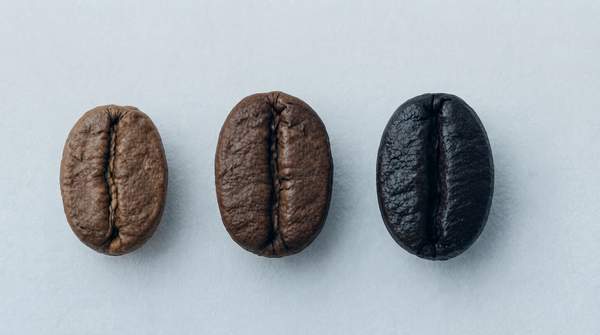
Roast level refers to the degree to which beans are roasted, and it dramatically alters how coffee tastes, as Door County Coffee & Tea explains. Light roasts highlight the bean's natural acidity and origin flavors — the fruity or floral notes that come from where the coffee was grown rather than from the roasting process itself. Achilles Coffee Roasters describes light roasts as the purest expression of a bean's origin, celebrated for their bright, lively character.
Medium roasts occupy the middle ground. Verena Street's Eric Gantz characterizes them as balanced, with nutty and chocolate notes and a moderate body, and notes that medium is the most widely consumed roast level in the United States. Stumptown Coffee describes the medium profile as mellow and chocolatey, with notes of brown sugar, nuts, or baking spices, and medium acidity.
Dark roasts shift the emphasis from origin to roast. Achilles Coffee Roasters notes that darker roasts bring out deeper, toastier flavors like chocolate or spice, and Stumptown points out a fact that surprises many drinkers: dark roasts are actually the least acidic of the three, because the extra time in the roaster mellows acidity while building boldness.
The Science of Extraction: Solubility and Density
Why does any of this matter for brewing? Because roast level changes the physical behavior of the bean. Stone Creek Coffee's Val Newhouse lays out the mechanism clearly: lighter roasts are denser and require slightly more extraction to unlock their flavors, while darker roasts are more soluble and extract more quickly, often producing a heavier body and deeper roast character.
Rising For People Coffee Co.'s Philip Koci adds the structural detail: dark roasts have a more porous structure, making them more readily soluble and requiring a shorter extraction time. In practical terms, water has an easier time penetrating and dissolving a dark bean than a light one.
Your brewing method, in turn, determines how water interacts with the grounds — which means it directly influences how a given roast will taste in the cup. Pair a dense, slow-extracting light roast with a method that rushes water past the grounds, and you'll taste sourness from under-extraction. Pair a fast-dissolving dark roast with prolonged, aggressive extraction, and you'll pull in bitterness. The goal is balance: matching the bean's solubility to the method's extraction dynamics.