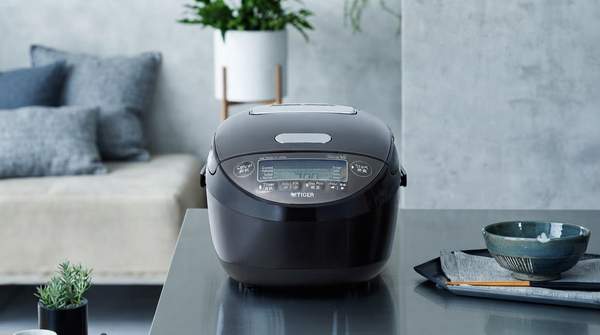
When I started comparing rice cookers, I assumed the marketing labels—Micom, IH, Pressure IH—described three competing gadgets. They don't. They describe three tiers that stack the same two ingredients: a heating method and a control system. A microcomputer (Micom) cooker uses fuzzy logic to adjust time and temperature but heats from a coil at the bottom. An induction (IH) cooker keeps that same computer brain but heats the whole pot magnetically, producing firmer, more defined grains. A pressure induction cooker adds sealed, above-boiling heat for chewy, sweet rice that stays soft after cooling. Pick the tier that matches the texture you want, and the choice mostly makes itself.
Understanding Rice Cooker Technologies: Heating and Control
Every modern rice cooker is really two machines in one. The first is the heating method: either a conventional electric element at the base of the unit that pushes thermal energy up through the pot, or induction, which uses electromagnetic fields to generate heat inside the inner pot itself. Tiger Corporation, which builds cookers on all of these platforms, describes the difference in terms of coverage—a bottom heater warms gently from below, while induction turns the entire pot into the heat source for exceptionally uniform distribution.
The second machine is the control system. As Jessika Toothman explains at HowStuffWorks, basic rice cookers complete their task "in a single-minded, mechanical manner," while fuzzy-logic models carry computer chips that direct adjustments to cooking time and temperature mid-cycle. Bon Appétit's Adam Campbell-Schmitt puts it plainly: Micom is short for "microcomputer," which actively adjusts cook settings to avoid mushy or underdone rice, and fuzzy logic is the mathematical term for the decision-making process the Micom uses. The tiers differ by how these two pieces combine.
Microcomputer (Micom/Fuzzy Logic) Rice Cookers
The Micom tier is where computerized cooking begins. A chip reads conditions during the cycle and makes small adjustments to time and temperature rather than running a fixed program. That flexibility is what separates it from a one-switch cooker: the machine can compensate for the rice variety, the amount of water, and the conditions of the moment instead of blindly following a single curve.
The payoff shows up in the settings. Fuzzy-logic cookers typically offer dedicated cycles for sushi rice, porridge, mixed rice, white rice, sweet rice, and brown rice, and some models add texture settings so you can choose hard or soft, sticky or wet. The heating itself, though, stays conventional: a bottom element that takes time to heat up and cool down. It works well enough, as Campbell-Schmitt notes, especially with fuzzy logic in the mix. The result, in Tiger's characterization, is soft, tender, comforting rice—consistently good, but without the fine-grained temperature authority of the tiers above.