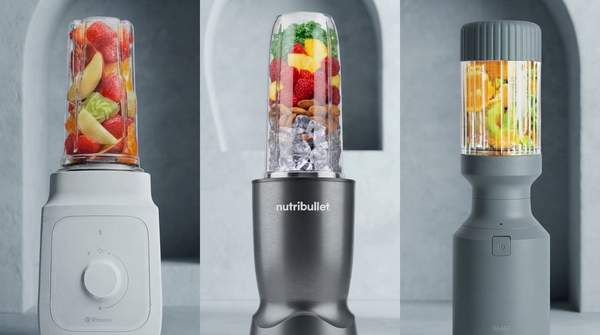
For home cooks and culinary enthusiasts, selecting the right blender can significantly impact the ease and success of various kitchen tasks. The performance of blenders—whether personal, countertop, or immersion—is fundamentally shaped by their motor power, blade design, and container characteristics. Understanding these mechanical and design differences is key to making an informed purchasing decision that aligns with your specific culinary needs, from crushing ice to blending hot soups or making nut butters.
Understanding Blender Types: Personal, Countertop, and Immersion
Blenders come in three primary types, each with a distinct design tailored for different uses. The classic countertop blender features a motor base that sits beneath a jar containing the blades. These are the traditional workhorses of the kitchen, designed for a wide range of blending tasks.
A personal blender is a more compact version of the countertop model, typically designed to prepare one to two servings at a time. These smaller units are often battery-operated and have gained popularity for their convenience in making single-portion drinks or purees, as noted by AENO Blog.
In contrast, an immersion blender is a handheld appliance with a long arm that has blades at its end. Unlike countertop models where food is placed into the blender, an immersion blender is placed directly into the food's container, such as a pot of soup or a bowl of sauce, according to HowStuffWorks. Some immersion blenders also offer various attachments for chopping, whipping, and grating ingredients, making them versatile tools for kitchen experiments, as described by AENO Blog.
Motor Power: Wattage, Torque, and Performance
The motor is the heart of any blender, and its power directly influences the appliance's ability to handle different ingredients. While manufacturers commonly display wattage, which measures the power consumed by the motor, it is the generated power, or torque, that truly dictates blending performance, according to HowStuffWorks. Torque is the rotational force that prevents the motor from straining when it encounters resistance from tough ingredients. Unfortunately, manufacturers often do not disclose specific torque values, making wattage a more common but less precise indicator of a blender's raw power.
For demanding tasks like making nut butters, grating hard cheese, or preparing hummus, a high-power motor is essential, as KitchenAid points out. While any blender can mix soft ingredients, tougher tasks require significant motor strength. Restaurantware, in a discussion about commercial hand blenders, emphasizes that a high-wattage motor doesn't automatically equate to higher efficiency; instead, it's crucial to look for motors that balance power with energy efficiency to maximize output while minimizing consumption. For instance, a busy soup kitchen needing to blend large quantities quickly would ideally opt for a high-power commercial blender with at least 750 watts.