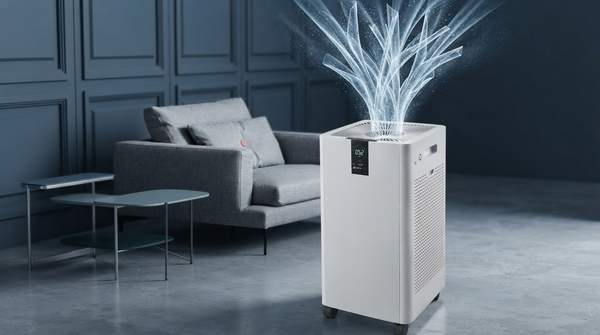
If you're shopping for a large living space, the single most useful move you can make is this: buy more purifier than your room strictly requires, then run it on a lower, quieter speed. That's the strategy that expert testers keep returning to, because a unit that's merely adequate will spend its life on high—the one setting manufacturers use for their ratings and, not coincidentally, the loudest one. Here's how I'd work through the decision, metric by metric.
Why Air Quality Matters in Large Rooms
Large rooms are where underpowered purifiers fail quietly. CNET's buying guidance puts coverage and size first: "the primary consideration for buying an air purifier is how much square footage you need to cover," and trying to save money with a smaller unit "will only result in disappointing performance." A big open living area simply takes longer to cycle through a small machine, so every performance shortfall compounds with each additional square foot you add.
Understanding CADR: Your Room's Cleaning Power
CADR, or Clean Air Delivery Rate, measures how quickly a purifier removes pollutants like smoke, dust, and pollen from a room. The rule of thumb, as The Strategist's Michael Zhao explains, is that your room's square footage should roughly match the machine's Smoke CADR: a 300-square-foot living room with standard eight-foot ceilings calls for a Smoke CADR around 300.
There's a catch baked into that number. CADR is measured on the highest and loudest fan setting, which is why Zhao recommends getting "a unit with more power than necessary so it can still effectively clean the air while running on quieter settings." In other words, the published figure tells you the ceiling, not what you'll actually live with day to day.
The Oversize Advantage: Power and Quiet
This is the insight that resolves the large-room dilemma. Wirecutter's testing team is blunt: "Oversized is okay. It's better to have 'too much purifier' than not enough," because "purifiers rated for larger spaces can be operated on lower, quieter speeds." Consumer Reports echoes it—most models suitable for large rooms of 350 square feet and up can also work smaller spaces at lower speeds, and lower speeds tend to be quieter when you're watching TV or sleeping.
Consumer Reports even suggests the operational version: run high when you're out of the room, low when you're in it, or simply "buy an air purifier certified for a larger area so that you can run it on a low speed and still have it work effectively." One quality, high-CADR machine beats several underpowered units, as Air Purifier First's Milan Antonic frames it—outperforming them on cleaning speed, noise, and energy use—unless your space exceeds what any single purifier covers.