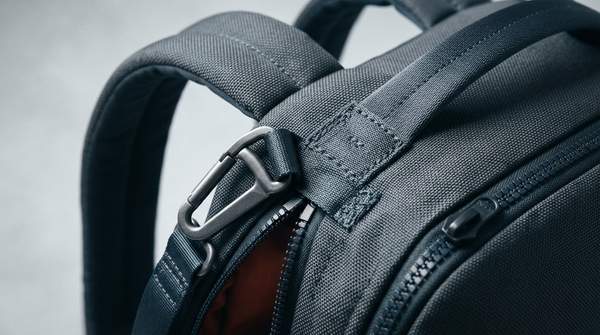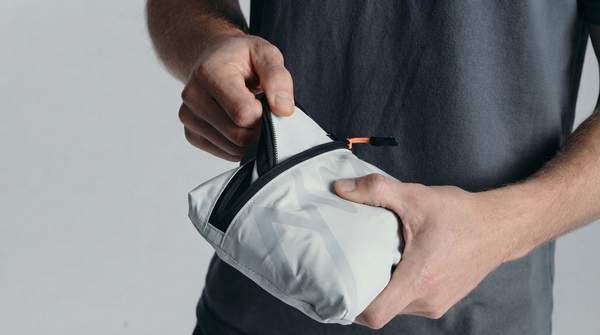
You can predict how a packable backpack will perform before you ever stuff it into your luggage. The material listed on the product page, the closure style, and the presence or absence of padding tell you most of what you need to know about durability, weight, water resistance, and comfort. The catch is that no single spec tells the whole story. A fabric's denier, its weave, and its coating interact, so a thin coated ripstop can outperform a thicker plain weave. What follows is a framework for decoding those choices against your actual trip.
Understanding Packable Backpack Materials: Denier, Fabric Types, and Coatings
Start with the fabric line in any product listing, because it compresses several decisions into one phrase. Take something like "70D ripstop nylon." The "D" is denier, a measure of the weight, and indirectly the thickness, of the individual fibers used in the weave. Higher denier generally means a heavier, more robust fabric; lower denier means lighter weight and better compressibility. That much is intuitive. What is less intuitive is that denier alone is a poor predictor of real-world performance.
As fabric specialists at Canvas ETC explain, a lower denier fabric such as a 70D nylon ripstop with an effective polyurethane coating can demonstrate superior tear strength and better waterproofness compared to a higher denier fabric like a 400D plain-weave nylon with no coating. Their guidance is that evaluating the complete fabric specification, meaning material, denier, weave, and finish together, is necessary for accurate performance assessment. Two practical lessons follow from this.
First, the ripstop weave matters. Ripstop fabrics incorporate a reinforced grid pattern that stops small tears from propagating across the fabric, which is why a lightweight ripstop can survive the abrasion of trail use that would shred a plain weave of similar weight. Second, the coating matters as much as the base fabric. A polyurethane (PU) coating is what turns a woven nylon from "water-absorbing" into "water-resistant," and its presence and effectiveness are crucial for performance, not just the denier number. When a listing omits coating information entirely, treat the water-resistance claims cautiously.
The base fiber choice adds another layer. Nylon denier fabrics generally surpass polyester in mechanical strength and abrasion resistance, whereas polyester typically offers superior UV resistance, reduced water absorption, and lower cost, according to the same Canvas ETC comparison. For a packable bag that lives inside a larger suitcase most of the time, UV exposure is minimal and nylon's abrasion advantage usually wins. For a bag that will spend long days strapped to the outside of a pack in mountain sun, polyester's UV resistance becomes a genuine consideration rather than a marketing point.