Here's the short answer before we get into the mechanics. If you game or watch fast action and want crisp motion with deep blacks, single-chip DLP is the technology most often recommended—but you need to check whether you're sensitive to the "rainbow effect" that color-wheel DLP models can produce. If you're projecting in a bright classroom, boardroom, or living room and want vibrant color that holds up against ambient light, 3LCD is the practical pick. If you're building a dark-room home theater and want the richest color accuracy and smoothest transitions, LCOS sits at the high end of the market. There is no single "best" technology—only the best match for your room, your content, and your eyes.
I've spent enough time reading projector spec sheets to know they bury the interesting differences. So let's walk through how each technology actually makes a picture, where each one shines, and where each one stumbles.
Understanding Projector Display Technologies: DLP, 3LCD, and LCOS
Every projector needs two things: a light source and something that turns that light into an image. The light source—lamp, LED, or laser—is a separate question from the imaging chip, and that distinction trips up a lot of buyers. This article is about the imaging side: the three core technologies that shape what you actually see on the wall.
As Dangbei's projector technology guide explains, each of the three has its own way of creating images, with distinct strengths and trade-offs. LCD projectors use the same core technology found in many TVs and monitors, relying on three separate LCD panels—one for each primary color. DLP takes a different route, bouncing light off a chip covered in microscopic mirrors. LCOS, as Dangbei describes it, combines features of both: instead of light passing through liquid crystals, LCOS reflects it off a silicon-backed panel, resulting in highly detailed images with smooth color transitions.
Those mechanical differences aren't trivia. They explain why one technology handles motion better, why another resists dust, and why a third costs more. Everything downstream—contrast, color, artifacts—flows from how each chip manipulates light.
DLP Technology: Sharpness and Speed
DLP is the technology you'll find in the overwhelming majority of cinemas. According to ViewSonic's comparison of DLP and 3LCD, over 90% of digital cinemas and IMAX theaters rely on DLP technology, not only for sharp detail but also for stable, reliable color performance. That's a strong endorsement of the technology's fundamentals.
For home viewers, the appeal is motion. Dangbei credits DLP with smooth motion handling and low input lag, great for gaming or action-packed content, and ViewSonic echoes that DLP projectors are known for high contrast, deep blacks, and minimal motion blur. AWOL Vision's technology guide rates DLP's motion clarity as "Excellent"—its highest rating of the three technologies. DLP is also durable and low-maintenance, with Dangbei noting no need for filter replacements, and AWOL Vision attributing minimal dust maintenance to sealed optics.
The catch is the rainbow effect. Single-chip DLP projectors with color wheels can produce fleeting flashes of red, green, and blue in certain scenes, which Dangbei notes can be distracting to sensitive viewers. Not everyone sees it—but those who do often can't unsee it. AWOL Vision rates the risk as "Low" for color-wheel models and "None" for triple-laser configurations, so the light source matters here. Color performance similarly varies: AWOL Vision calls DLP's color gamut "Good" with a color wheel but "Exceptional" with a triple-laser light source.
3LCD Technology: Vibrant Colors and Brightness
3LCD is the workhorse of well-lit rooms. Because it uses three dedicated panels—one each for red, green, and blue—it produces what Dangbei describes as rich, vibrant colors and sharp image clarity, with no rainbow effect at all. AWOL Vision rates 3LCD's color gamut as "Very Good" and its motion clarity as "Very Good," just a step behind DLP's top rating.
Where 3LCD genuinely separates itself is in ambient light. ViewSonic notes that 3LCD projectors are effective in spaces with higher ambient light, making them particularly suited for classrooms and small boardrooms, where their brightness and vibrant color displays stay clear even in well-lit conditions. If your projector lives in a family room with windows rather than a blacked-out cave, that matters more than any spec-sheet contrast ratio.
There are two honest drawbacks. First, AWOL Vision rates 3LCD's black levels below its rivals, which can soften the cinematic feel in very dark rooms. Second, the three-panel design introduces a potential convergence error—where the panels don't align perfectly—whereas a single-chip DLP design is, in AWOL Vision's words, "Perfect" on image alignment. And 3LCD requires filter cleaning, per AWOL Vision's maintenance comparison, where DLP and LCOS need only minimal upkeep thanks to sealed optics. Dangbei adds that 3LCD models tend to be compact, energy-efficient, and often include zoom and lens shift for flexible setup.
LCOS Technology: The Best of Both Worlds?
LCOS is the technology that borrows from both rivals. By reflecting light off a silicon-backed liquid-crystal panel rather than passing light through it, LCOS aims for the detailed, artifact-free image that LCD's three-chip design enables, with the reflective efficiency of DLP. Dangbei describes LCOS as known for superior image quality, and notes these projectors are often found in high-end home theaters, with excellent color accuracy and sharpness as headline benefits.
AWOL Vision's comparison backs that up on color, rating LCOS's color gamut as "Excellent"—the strongest of the three—and confirming no rainbow effect. On motion, though, AWOL Vision rates LCOS only "Good," a notch below both competitors, which is worth knowing if gaming is your priority. Like 3LCD, its multi-panel design carries a potential convergence error, per AWOL Vision, though its sealed optics keep dust maintenance minimal.
I'll be candid about the limits of what the evidence supports: the sources I've drawn on don't offer explicit claims about LCOS's long-term maintenance requirements beyond the sealed-optics note, and they don't quantify response times or color-gamut percentages for any of the three technologies. LCOS is generally positioned as the premium choice for image quality, but "best of both worlds" is a marketing framing, not a measured guarantee.
Projector Technology Comparison: DLP, 3LCD, and LCOS
Here's the synthesis of everything above, drawn from the three technology guides. Each cell reflects what the sources explicitly claim, with qualifications where the technology's performance depends on configuration.
| Feature | DLP | 3LCD | LCOS |
|---|---|---|---|
| Motion Clarity (Gaming) | Excellent — smooth motion, low input lag | Very Good — solid, but check specs for competitive gaming | Good |
| Color Performance | Good (color wheel) to Exceptional (triple laser) | Very Good — rich, vibrant, high color brightness | Excellent — strong color accuracy |
| Contrast & Black Level | High contrast, deep blacks | Less impressive blacks; can soften dark-room cinema | Superior image quality overall, per Dangbei |
| "Rainbow Effect" Risk | Low (color wheel) to None (triple laser) | None | None |
| Maintenance (Dust) | Minimal — sealed optics, no filters | Filter cleaning required | Minimal — sealed optics |
| Image Alignment | Perfect (single-chip) | Potential convergence error | Potential convergence error |
Read the table with your own priorities in mind. A gamer should fixate on the motion row and the rainbow-effect row together, because the fastest technology is also the only one with an artifact risk. A movie lover in a dark room should weigh the contrast and color rows. A presenter should mostly ignore both and look at how each technology behaves in light—which is where 3LCD's strengths concentrate.
Choosing Your Projector: A Guide for Specific Use Cases
Gaming and sports: DLP is the evidence-backed pick. Its excellent motion clarity and low input lag suit fast content, and its deep contrast helps dark game scenes pop. Before buying, though, spend ten minutes watching a color-wheel DLP unit in person—if you perceive rainbow artifacts, choose a triple-laser DLP or move to 3LCD, which Dangbei confirms doesn't suffer from the effect.
Bright rooms, classrooms, and presentations: 3LCD is the clear match. ViewSonic specifically credits it with staying clear in well-lit conditions, making it practical for education and collaborative sessions. Its vibrant color, flexible setup features, and freedom from rainbow artifacts make it the low-friction choice for shared, lit spaces.
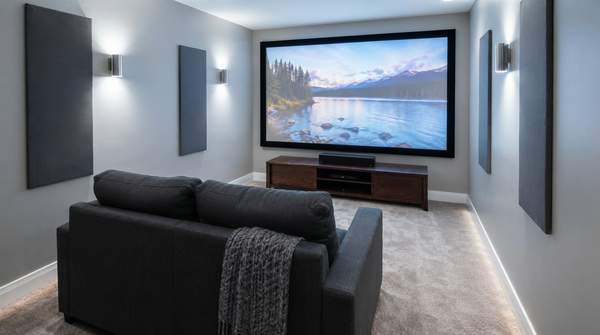
Dark-room home theater: LCOS is the technology the sources most associate with high-end home cinema, thanks to excellent color accuracy and smooth transitions. If budget points you toward DLP instead, its high contrast and deep blacks still deliver a cinematic experience—just verify your rainbow sensitivity first. 3LCD works too, but its weaker black levels are most noticeable in a fully darkened room.
Portable and low-maintenance use: DLP's sealed optics and filter-free design make it the easiest to own long-term, and Dangbei notes LCD models tend to be compact and energy-efficient if portability matters more than absolute image quality.
Making Your Choice: Matching Technology to Your Needs
The decision comes down to this: select the projector technology that aligns with your primary use case and sensitivity to specific image artifacts, prioritizing either motion clarity, color vibrancy, or ultimate contrast. DLP for speed and blacks, 3LCD for brightness and artifact-free color in lit rooms, LCOS for the richest color in a dedicated theater.
Before you commit, test the one thing no spec sheet can tell you: watch a color-wheel DLP projector in person and check for rainbow artifacts, and preview your chosen technology in lighting that matches your actual room. The measurable indicator of a good choice is simple—the chosen projector's performance in your specific viewing environment, whether that's gaming responsiveness, color accuracy for movies, or visibility in ambient light, meets your expectations for the primary application. If it does, you picked the right chip.
Sources
- LCD vs DLP vs LCOS and Lamp vs LED vs Laser: Projector Types Explained — Dangbei Official Store US
- DLP vs. 3LCD Projector: Which One is Better? — ViewSonic Library
- Guide to Modern Projector Imaging Technology: LCD, DLP, and LCoS — AWOL Vision