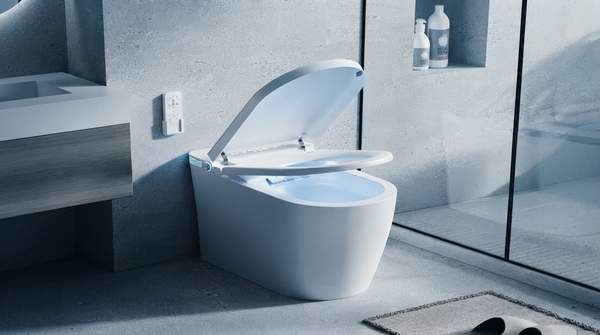
Buying a smart toilet is less about finding the "best" model and more about matching the right features to how you actually live. Guides from Consumer Reports to The UFS Group agree that the deciding factors are your priorities—comfort, hygiene, or water and energy savings—and whether your bathroom can support the fixture at all. Here is a framework for working through both questions before you spend a dollar.
Prioritizing Smart Toilet Features: A Decision Framework
Most shoppers start with a feature list and a price tag, but ACE DECOR's buying guide argues that what really determines daily satisfaction is whether the toilet fits your family's habits, your bathroom's conditions, and the ease of long-term maintenance. That reframing matters: two models with identical spec sheets can suit completely different households. The UFS Group similarly advises starting your decision by considering your family's needs and lifestyle, not the marketing brochure.
The practical version of that advice is to sort yourself into one of three broad profiles—the Comfort-Seeker, the Hygiene-FFocused buyer, or the Eco-Conscious homeowner—then buy the features that profile demands and skip the rest. Feature lists on integrated smart toilets can include everything from voice control and ambient lighting to microwave sensing and battery backup, as one vendor's model rundown shows, and paying for functions you'll never use is the fastest way to regret the purchase.
The Comfort-Seeker's Guide to Smart Toilet Features
If your priority is a warmer, more pleasant daily experience, the core features are the ones that show up most consistently across guides: heated seats, warm-air dryers, and endless warm water. Consumer Reports notes that bidet seats—a middle step between a basic bidet attachment and a full smart toilet—commonly offer heated seats, warm-air dryers, nightlights, and automatic lid opening and closing, depending on the model.
Personalization is where comfort features earn their price. Different users can save their preferred settings for water pressure or heated-seat temperature, according to Consumer Reports, which matters in a household where one person likes a toasty seat and another finds it too warm. A vendor example illustrates the range: one mid-priced model combines four-level seat heating, adjustable warm-air drying, and continuous warm water, along with hands-free conveniences like automatic lid and flush functions. When comparing models, check how many heating levels and adjustment ranges each offers, since "adjustable" can mean two settings or many.
Hygiene-Focused Features for Enhanced Cleanliness
For hygiene-minded buyers, the smart toilet's core advantage over a traditional fixture is the wash function itself. Smart toilets offer features not found in traditional toilets, such as bidets, heated seats, and automatic functions, according to a comparison by Amy Li at cleanman-cn.com—and she points to a secondary benefit: bidets and air dryers significantly reduce toilet paper use.
Two hygiene features deserve special attention in your comparison. Automatic flushing means the toilet clears itself after each use, which the UFS Group frames as both a hygiene and convenience benefit. Bowl pre-wetting—coating the bowl surface with water before use—is another vendor-listed feature intended to aid cleaning. If keeping the bidet mechanism itself sanitary matters to you, prioritize models with self-cleaning nozzles, which maintain the cleanliness of the wash system between uses. Not every model includes every feature, so confirm which ones your shortlist actually has rather than assuming they're standard.
Eco-Conscious Choices: Water and Energy Efficiency
If conservation is your driver, you're balancing two different kinds of efficiency. On water, look at flush design first: dual-flush and low-gallon-per-flush models conserve water, and Good Housekeeping's coverage cites models rated at as little as 1.28 gallons per flush. Automatic flushing and reduced toilet paper use, which Amy Li's review highlights, round out the water-and-waste picture.
On energy, the heating method is your key trade-off. ACE DECOR's guide draws the distinction directly: instant heating is quick but energy-hungry, while heat storage is more efficient but slower to deliver warm water. In other words, you're choosing between on-demand warmth with higher electricity draw and a tank-based system that holds heat longer but takes a moment to respond. Neither guide supplies a dollar-figure comparison of annual operating costs, so treat heating method as a qualitative trade-off—speed and energy appetite versus efficiency and responsiveness—and check the wattage listed for any model you're seriously considering.
Smart Toilet Decision Framework
Use this matrix to translate your priority profile into a feature shortlist and the corresponding checks it forces on your bathroom. Start in the left column with your primary motivation, then confirm each feature's trade-off and installation implication before you commit.
| User Priority | Key Feature Category | Decision Point / Trade-off | Installation Check |
|---|---|---|---|
| Comfort-Seeker | Heated seat | Adjustable warmth; users can save preferred temperature settings | Requires an electrical outlet near the toilet |
| Comfort-Seeker | Warm-air dryer | Drying temperature and intensity can be customized; reduces toilet paper use | Confirm the feature is included on the specific model |
| Hygiene-Focused | Bidet wash with self-cleaning nozzle | Wash function improves personal hygiene; self-cleaning nozzle keeps the bidet sanitary | Verify water pressure supports the wash system |
| Hygiene-Focused | Automatic flushing and bowl pre-wetting | Hands-free clearing after each use; pre-wetting aids bowl cleaning | Check feature availability varies by model |
| Eco-Conscious | Water efficiency | Dual-flush and low-GPF models; some rated at 1.28 gallons per flush | Confirm flush mechanism compatibility with your plumbing |
| Eco-Conscious | Water heating method | Instant heating is quick but energy-hungry; heat storage is efficient but slower | Consider the electrical load near the toilet |
| All Homeowners | Electrical requirements | Features like heated seats and dryers need power | 125-volt GFCI outlet required in the bathroom |
| All Homeowners | Water pressure | Too low means weak function; too high risks leaks or damage | Typical requirement: 20 to 80 psi; test with a gauge |
The matrix also clarifies a common confusion: a bidet seat is a step up from a bidet attachment and sits between it and a full smart toilet in both price and complexity, according to Consumer Reports. Electric bidet seats offer more features but need outlet access and may involve more installation effort than nonelectric seats—useful if you want the comfort or hygiene functions without replacing the whole fixture.
Essential Pre-Purchase Bathroom Checks
Before you buy anything, verify your bathroom can host it. The electrical check comes first: Bill Strang, president of corporate strategy, e-commerce, and retail at toilet manufacturer Toto, told Consumer Reports that you'll need access to a 125-volt ground-fault circuit interrupter (GFCI) outlet in your bathroom—a type that protects against electric shock and is required by code in bathrooms. Many older bathrooms don't have an outlet near the toilet, so look now rather than after delivery.
Next, check water pressure. The UFS Group advises that smart toilets typically need pressure between 20 and 80 psi; too low and you may get inadequate flushing or malfunctioning features, too high and you risk leaks or damage. Test with a pressure gauge and consult a plumber if adjustments are needed. Finally, measure your space and clearance before purchasing—Consumer Reports emphasizes this step—and if accessibility matters to your household, note that while most smart toilets are comfort-height, some models sit at a traditional 15 inches, which Good Housekeeping's testers flag as less suited to aging-in-place scenarios than ADA-compliant fixtures.
Your Smart Toilet Decision: A Personalized Path
My recommendation after working through this framework: homeowners should prioritize smart toilet features based on their primary needs—comfort, hygiene, or eco-consciousness—and thoroughly check their bathroom's electrical, water pressure, and space compatibility before purchase. Resist buying a feature list you won't use; a bidet seat with the two or three functions you value may serve you better than a fully loaded model that demands an outlet and plumbing your bathroom doesn't have.
The measurable indicator that you're ready to buy is a completed personal checklist of desired features and confirmed bathroom compatibility for installation—a filled-in copy of the matrix above, plus a gauge reading of your water pressure and a located GFCI outlet. Until those three checks are done, no model on any best-of list is a safe purchase.
Sources
- 4 Best Smart Toilets, Lab-Tested and Reviewed - Consumer Reports
- 2026 Updates|Most Important Smart Toilet Features That Actually Matter — The UFS Group
- What Is the Best Smart Toilet? 6 Top Brands and Models in the World — ACE DECOR Bathroom
- Best Smart Toilets of 2026: 7 Top Picks Compared — Sanyipace Smart Toilet
- Why Invest in a Smart Toilet? Comprehensive Reviews and Insights — Cleanman CN
- Hot Take: Smart Toilets Are Totally Worth The Splurge — Good Housekeeping