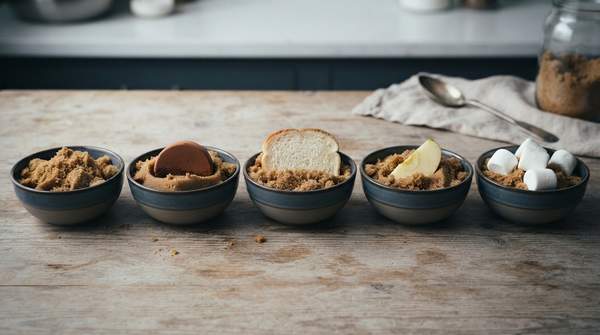
Brown sugar hardens because it loses moisture, and the fix is equally simple: put the moisture back and keep it there. An airtight container paired with a moisture source is the core strategy, and a soaked terra cotta disk is the longest-lasting, lowest-maintenance option — Domino Sugar and Redpath Sugar both recommend it, and Redpath says it keeps sugar soft for up to three months. If your sugar has already turned into a brick and you need it in the next ten minutes, the microwave or oven will rescue it, though only temporarily. Here is how to choose the right approach for your situation.
Why Brown Sugar Hardens: The Science of Moisture Loss
What makes brown sugar behave so differently from white sugar is its molasses coating. Brown sugar is granulated sugar combined with molasses, and that molasses layer is what gives the crystals their soft, damp, packable texture. Molasses holds on to moisture — but when that moisture evaporates, the coated crystals lock together into the familiar rock-hard block. Both Domino and Redpath describe the problem the same way: exposure to air draws the moisture out, and the sugar hardens as it dries.
This is why the counterintuitive advice is true: refrigeration is the enemy, not the friend. Cold storage encourages the moisture problem, so the pantry shelf — in a sealed container — is the better home. Redpath notes it's fine to keep brown sugar in its original packaging, as long as that package goes inside an airtight container. Whether you pour the sugar out or leave it in the bag, the seal against air is what matters.
Once you understand that hardening is purely a moisture story, every storage method becomes easy to evaluate. Each one is just a different way of introducing or retaining moisture inside a sealed container — and they differ mainly in how long they last and how much attention they demand.