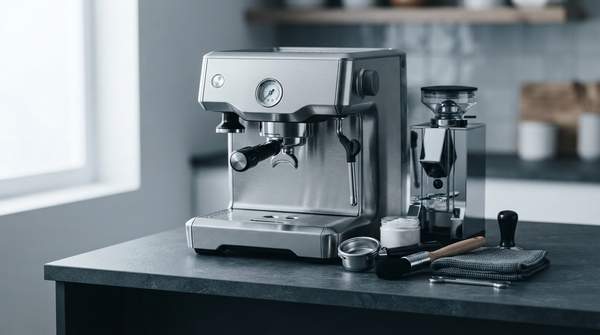
Most home espresso machines don't fail from heavy use; they suffer from neglect. As one cleaning guide for home baristas bluntly puts it, espresso machines "do not break from making coffee — they break from not being cleaned." The good news is that the routine is short: a wipe after each session, a backflush on the weekend, a descale when your water and calendar call for it. Below is a consolidated schedule for home machines, followed by a diagnostic table that maps the problems you can actually taste and see — dull, rancid shots or slow, choked extraction — to the specific cleaning task that fixes them.
Introduction: Why Cleaning Your Espresso Machine Matters
Every shot you pull leaves something behind. Coffee beans contain essential oils that create the rich crema we love, but those same oils emulsify and cling to the shower screen, the filter basket, and the portafilter — doubly so on brass surfaces, as the espresso enthusiasts at Home-Barista.com explain. Over time, coffee oils, fine grounds, milk residue, and limescale accumulate inside even well-made machines, and the machine manufacturer Unic identifies three distinct casualties: flavor, because oils and residues alter aroma and taste and dull the espresso's character; performance, because blockages in group heads and valves affect pressure, temperature, and flow rate; and hygiene, particularly in milk systems where poor cleaning can allow bacterial growth.
I think of it this way: the best beans in the world cannot make up for the impurities a dirty machine adds to your drinks. The residue question is also progressive. A subtle dullness in the shot — thinner crema, slightly muted flavor — is usually the first sign that a machine needs attention, and treating that change as a maintenance reminder rather than a bean problem, as the home barista guide suggests, stops residue from hardening into scale or stale oil before it becomes a bigger job.
Two boundaries before we begin: this guide covers home machines, not commercial equipment, and it describes general procedures rather than model-specific cleaning cycles. Always consult your machine's manual for its particular descaling or backflushing instructions, and for the cleaning solution it recommends.