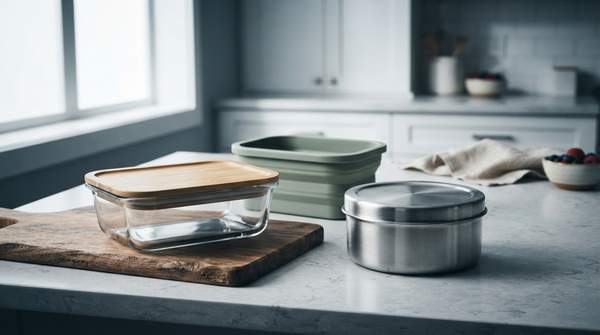
There is no single "best" plastic-free food storage material—there is only the best material for what you actually do in your kitchen. If you reheat and freeze in the same container, borosilicate glass is the clear winner. If you pack lunches for a commute or a backpack, stainless steel's light weight and near-indestructibility make it the smarter pick. And silicone, despite its flexible convenience, carries documented caveats around heat and fatty foods that most marketing glosses over. Here is how the three main plastic-free options compare, and how to choose among them without wasting money on the wrong container.
Borosilicate Glass: The Versatile All-Rounder
Borosilicate glass is the closest thing to a do-everything storage material. It is engineered to better withstand sudden temperature changes, which is what separates it from ordinary tempered soda-lime glass like Anchor Hocking or US-sold Pyrex. A comparison of plastic-free storage options published by the MicroPlastics research desk notes that borosilicate "handles temperature swings best," and that OXO considers going straight from freezer to preheated oven acceptable with its Smart Seal line—though some manufacturers still advise thawing before heating to avoid thermal shock.
The safety case is straightforward: glass does not leach chemicals into food, does not absorb odors, and does not stain the way plastic does. Consumer Reports, whose lab team has tested dozens of glass, steel, and silicone sets for drops, leaks, and ease of use, points out that even "BPA-free" plastic products may contain other ingredients that are equally worrisome or simply not well understood—making the inert glass body of a container a natural place to start reducing plastic exposure.
The trade-offs are weight and fragility. Glass is heavier than plastic or steel, which contributes stability on a shelf but is a genuine drawback for lunchboxes and travel. And while Consumer Reports' testing found glass sets that survived drop tests with top marks, glass can still shatter in a way steel never will. One more detail worth checking before you buy: many glass containers ship with plastic lids or latching mechanisms. The container body may be inert, but the lid is what touches your food when it is hot.